Supplier sourcing and vetting in Thailand
If you found your supplier on Alibaba, Google, or a trade directory, you are picking from maybe five percent of the real market. We find the other ninety-five: the established Thai manufacturers, wholesalers, and producers who do not market in English and never needed to.
Tell us what you are sourcingFrom THB 15,000. See full pricing
established Thai makers you will never find by searching
The real market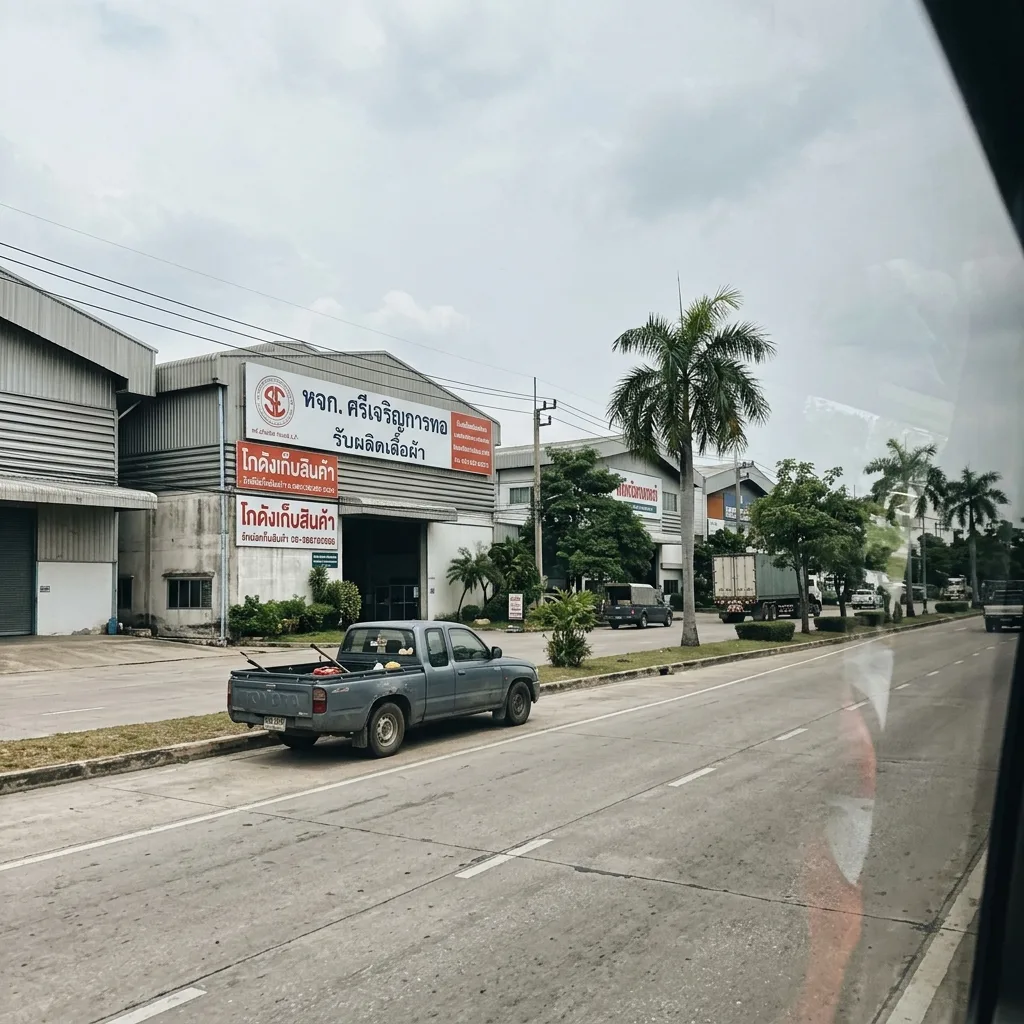
The trap most foreign buyers fall into
When a foreign buyer decides to source from Thailand, the journey almost always starts the same way. Search engines. Alibaba. Made-in-Thailand directories. A few trade-show contacts. After a few weeks they have a list of ten or twelve potential suppliers, narrowed to three or four after some email exchanges, and they pick one.
The problem is that the entire list came from suppliers who decided to market themselves to foreigners online. That is a self-selecting group: the suppliers most aggressive about exports, the ones with the slickest sales operations, and often the ones with the highest margins built in for English-speaking buyers.
The Thai supplier landscape is dominated by established, family-run, or mid-sized manufacturers operating for ten, twenty, sometimes fifty years. Full order books from domestic clients. No English websites. Not on Alibaba. You will not find them by searching. They are exactly the suppliers you want to work with. The only way to reach them is through someone who can find them locally, in Thai.
Where the real suppliers actually are
Real Thai sourcing happens in places that do not show up in search results.
Industrial estates outside Bangkok
Bangpoo · Amata City · Lat Krabang
Full of manufacturers who sell exclusively through distributors, brokers, and known relationships. They do not need a website. Their order books are full from people who already know them.
Sector trade associations
Textiles · Furniture · Plastics
The Thai Textile Manufacturing Association, the Thai Furniture Industries Association, the Plastics Industry Club. Each keeps a directory of vetted members, in Thai, not promoted to foreigners, worth ten times any online directory.
Wholesale clusters
Sampeng · Khlong Thom · Pratunam
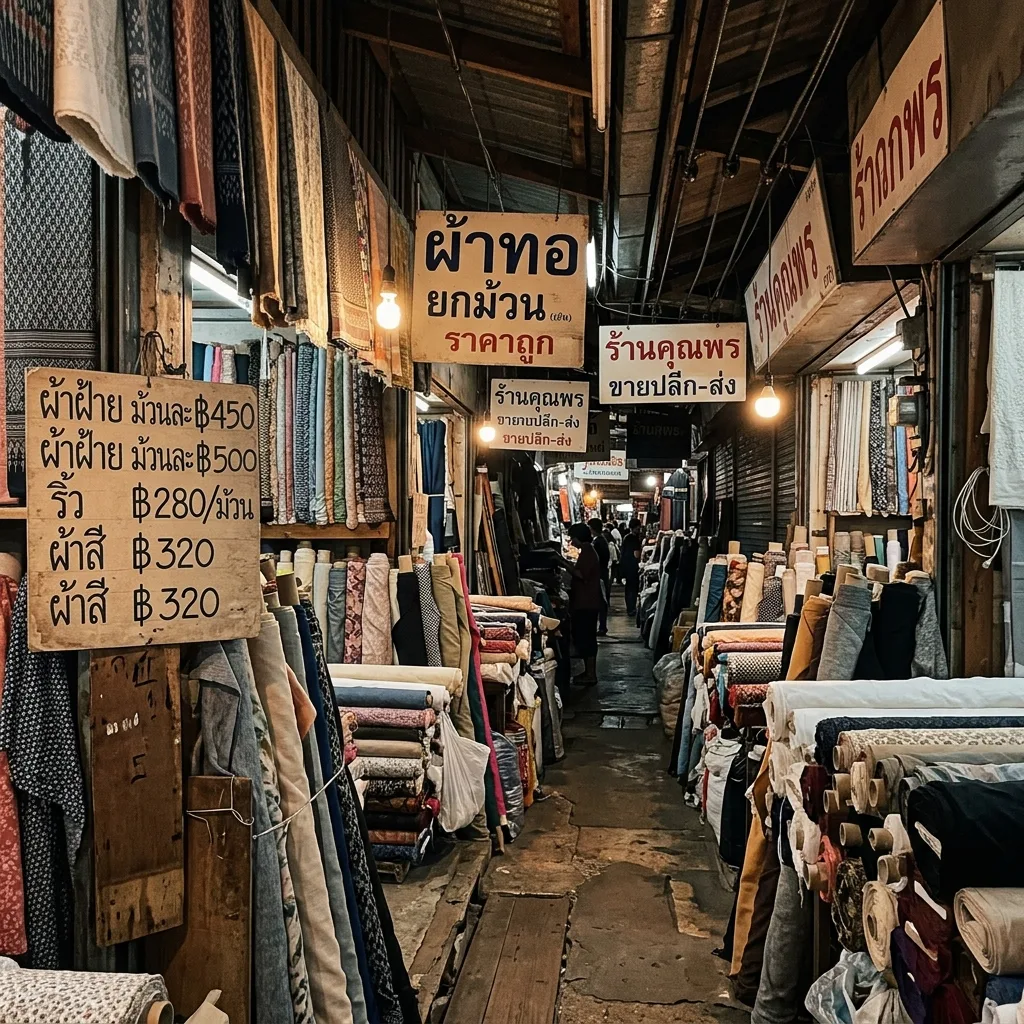
Physical markets where wholesale-level supplier relationships live, and where prices run sixty to seventy percent of what an export-facing supplier will quote you.
Personal networks
Factory owner to factory owner
Most Thai factory owners know other Thai factory owners. A single conversation in Thai with the right person can yield five referrals no search engine would ever return.
This is where we work. It is not glamorous and it cannot be replicated remotely.
How we source
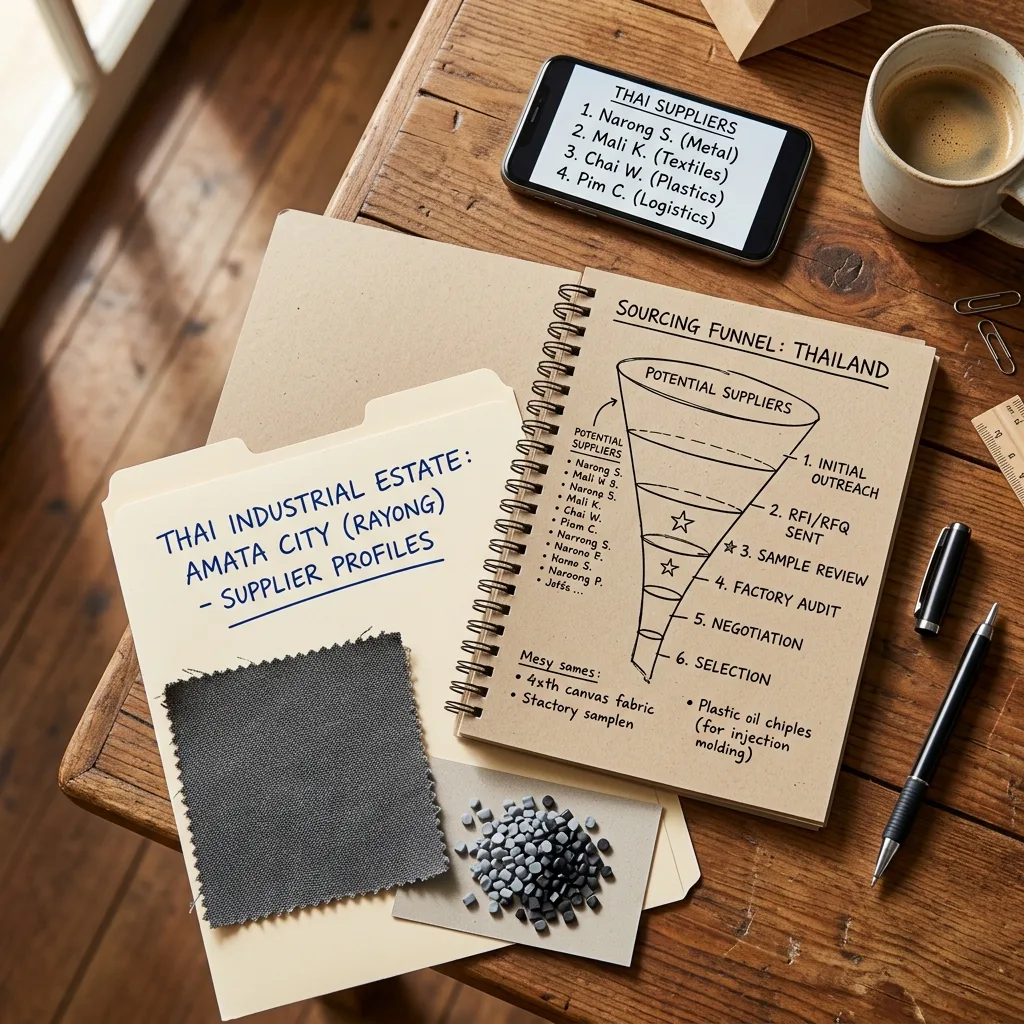
We treat every sourcing engagement as a structured funnel, not a list of leads.
Specification briefing
We talk through what you actually need: product type, target unit price, volume, quality tier, delivery timeline, packaging, certifications. The clearer the brief, the sharper the shortlist. Unsure on any of it? We help you define it against what the market really offers.
Market scan
We pull from sector associations, industrial-estate networks, and our existing supplier relationships, typically surfacing 15 to 30 candidates within a week. Names most foreign buyers would never see.
Filter to longlist
We screen each candidate against your brief: capacity, capability, financial stability, willingness to work with foreign buyers. Most get cut here. You receive a longlist of 8 to 12 with brief notes on each.
Outreach & qualification
We contact the longlist in Thai, request samples or capability documentation, and assess responsiveness, professionalism, and fit. Suppliers who handle early engagement poorly rarely become reliable partners later.
Shortlist with site visits
We visit the three to five strongest candidates in person. Photo and video reports of each facility, and confirmation that capability matches what they have claimed.
Final shortlist delivered
Three vetted suppliers, each with a profile, site report, sample assessment, pricing benchmark, and our honest opinion on which one we would pick, and why.
How we vet suppliers
The word gets used loosely. Here is what it means in our work, specifically.
This is what separates a real shortlist from a list of suppliers who replied to your emails.
- Physically visited by us, in person
- Company registration and operational history checked through Thai government records
- Stated capacity observed first-hand: production lines, staff count, current operational tempo
- Management questioned in Thai, the way an experienced Thai buyer would, and their answers noted
- Samples or production examples collected, where applicable
- One or two of their existing Thai customers spoken to (informally, off the record) about the second order, the third, the fifth
Your sourcing report
A sourcing report containing, for each shortlisted supplier:
When this service fits
You are entering the Thai market and have no existing supplier
You have a current supplier and want to benchmark whether their pricing and terms are competitive
You have outgrown a supplier and need one with more capacity
You are diversifying and want a second source for risk management
You have a niche product and cannot find a Thai manufacturer who can make it
You suspect your current supplier is overcharging you but have no way to verify
Why us versus the alternatives
Alibaba & online B2B platforms
Surface a self-selecting group of export-aggressive suppliers, generally with higher prices, less production focus on each buyer. Useful as a starting point, never the full picture.
Sourcing agents on commission
A structural conflict of interest. They are paid by the supplier, not by you. The one they recommend is the one paying them most, not the one best for your business.
Sourcing it yourself in person
Works if you already know the market. For first-time buyers it produces weeks of factory visits with no way to tell which were worth making.
Hiring a Thai sourcing employee
Gives you ongoing capacity, but takes months to build, costs a full salary, and assumes you have the volume to justify it.
We charge a flat fee, paid by you. Our only incentive is to deliver a shortlist you actually want to work with, because every shortlist that does not become a successful supplier relationship damages our reputation directly.
Scoped to your project
One working session on your requirements, then a written market read: how the Thai supplier landscape looks for your product, realistic price bands, minimum-order and certification realities, roughly how many viable candidates a full search would surface, and an honest call on whether it is worth doing. No supplier names, no site visits, no shortlist.
Scoped per project by product complexity, sector, and shortlist size. Three vetted suppliers, each with a full profile, site visit report, sample assessment, benchmark pricing, our written recommendation, and a warm introduction in Thai to the one you choose. Typically three to four weeks from briefing to final shortlist.
Already have quotations in hand? Checking whether a company is real is verification, not sourcing. We check up to three companies against the official Thai registry for THB 9,500.
Check a supplierTo put it in scale: if your annual purchasing volume from Thailand is USD 100,000, finding a supplier whose pricing is 10 percent lower than what you would have found alone is USD 10,000 per year, every year, for one engagement.

Tell us what you need to source
Send us a description of the product, your target price and volume, and any specifications that matter. We will get back to you with a scope, timeline, and quote. Not ready for a full engagement? Many clients start with the sourcing brief above. No commitment until you accept.